Welling has plenty of places that will rub your back for an hour. Very few will work out why it hurts and fix it. This guide covers what a treatment massage actually involves, what it costs here (£50 for 60 minutes), how to tell a trained therapist from an untrained one in two questions, and what to expect when you walk through my door at 15 St Michaels Road.
I’ll start with the thing nobody searching “massage Welling” wants to hear: most of what you’ll find is not going to fix your back.
It will feel nice. You’ll come out smelling of lavender. And on Monday morning the same knot between your shoulder blades will be sitting exactly where it was on Friday.
I know, because a good share of the people who book with me have already tried two or three of those places first. They arrive slightly embarrassed, as if they’ve been doing it wrong. They haven’t. They’ve been sold relaxation when what they needed was treatment, and nobody told them there was a difference.
I’m Tom McCay. I run Massage Works, a sports and remedial massage clinic in Welling. I hold the Level 5 Professional Diploma in Soft Tissue Therapy, which is the highest practitioner qualification in this field in the UK, and I’m a certified oncology massage therapist. I say that not to impress you but because, as you’ll see below, the letters after a therapist’s name are one of the only ways you can tell in advance whether an hour on their table is going to change anything.
This is the page I wish existed when people started searching for me. It is long, because the question deserves it. Skip to the bit you need.
Here is the whole thing in one line: a relaxation massage is done to you. A treatment massage is done with you.
In a relaxation massage, the therapist follows a routine. Back, legs, arms, neck, the same sequence for everyone, because the goal is a pleasant hour. That’s a perfectly good product. It is just not a treatment.
In a treatment massage, the first ten minutes are a conversation and an assessment. Where does it hurt. How long for. What makes it worse. Then I watch you move: a squat, reaching overhead, turning your head. Only then do I decide what to do, and it’s different for every person on the table.
Take two people who both book “a back massage”. One is a plasterer with a lower back that aches by Thursday. The other is an accountant whose neck seizes every time there’s a deadline. A routine treats them identically. An assessment finds that the plasterer’s problem is actually tight hips pulling on his pelvis, and the accountant’s is a laptop on a kitchen table. The hands-on work that follows is completely different, and so is the advice they leave with.
Massage is unregulated in the UK. Anyone can print a card. So the qualification is the only thing that tells you, before you’ve paid, what the person is actually trained to do.
I took my Level 3 in 2023, my Level 5 in 2024 (with a Distinction in clinical assessment, which is the part of the job I care most about), and the oncology certification in 2025. I’m telling you the dates because I’d want to know them, and because “years of experience” on a website tells you nothing about what someone can do.
People agonise over this choice far more than they need to. The honest answer for most aches is “book either sports or deep tissue and tell me what’s wrong; I’ll do what the problem needs”. But here is how they differ, and who tends to book each.
Injuries, tight muscles from training, pre- and post-event work. Runners, footballers, gym-goers, weekend athletes.
Chronic tension, knots, years-old back, neck and shoulder pain. Desk workers, drivers, tradespeople.
During and after cancer treatment. Gentle, adapted to surgery, lines, counts and lymphoedema risk.
Back and hip pain, swelling and sleep from the second trimester. Side-lying, pillows.
Support for a joint or muscle in the weeks after injury. 30 minutes alone or added to a massage.
Suction for stubborn back and shoulder tension. Added to a massage; leaves marks for a few days.
Despite the name, you do not need to be an athlete. You need a muscular problem with a cause. A hamstring that won’t let go after Sunday league. Calves that cramp at mile eight. A shoulder that’s been “a bit off” since you started at the gym. Sports massage combines deep strokes, stretching, trigger point work and soft tissue release, chosen for the specific problem.
Who books it: runners training for a first 10k or a marathon, five-a-side players, cyclists, gym-goers, and a surprising number of people in their fifties and sixties who’ve been told by a GP to “rest” something that has been resting for a year without improving.
Sports massage in Welling: techniques, benefits and what to expect
This is the one for tension that has built up over years rather than weeks. The knots between the shoulder blades. The neck that only turns so far. The lower back that is never quite right. Deep tissue work is slow and heavy, using forearms, elbows and knuckles as well as hands, and it reaches the deeper layers of muscle that lighter work never touches.
Who books it: desk workers, drivers, tradespeople, new parents carrying a baby on one hip, and anyone who has ever been told they “hold their stress in their shoulders”.
Expect to feel it the next day. That’s normal and it passes.
Deep tissue massage in Welling: who it suits and what it feels like
This is massage adapted for people living with cancer, going through treatment, or recovering afterwards. Pressure, positioning, session length and the areas worked are all changed according to your treatment, your blood counts, and any surgical sites, ports or lymphoedema risk.
It’s a specialist qualification and very few therapists in this part of London and Kent hold it, which is why people travel from well beyond Welling for it. If you are in treatment, speak to your medical team first; a trained therapist will ask whether you have.
Oncology massage in Welling: safety, adaptations and who it helps
Back pain, hip pain, swollen legs and broken sleep from around week 13 onwards. You lie on your side with pillows, the pressure is light to medium, and there is no deep work on the legs. I only treat after the first trimester; any therapist who offers earlier is one to avoid.
Pregnancy massage in Welling and South East London
K-taping is the coloured tape you see on athletes. It supports a joint or muscle, reduces swelling, and reminds you not to overload an area while it heals. Thirty minutes on its own for £30, or added to the end of a massage. Good for ankles, knees, shoulders and lower backs in the weeks after an injury.
Fire cupping uses glass cups and a brief flame to create suction, which lifts the tissue rather than pressing it. I offer it as an addition to a massage for stubborn back and shoulder tension, not on its own. It leaves circular marks for a few days, so plan around holidays and weddings.
I charge the same for sports, deep tissue, oncology and pregnancy massage. That’s deliberate. If one treatment cost more, there would be a quiet incentive to steer people towards it, and I’d rather you booked the right thing.
| Treatment | Length | Price |
|---|---|---|
| Sports, deep tissue, oncology or pregnancy massage | 60 minutes | £50 |
| Sports, deep tissue, oncology or pregnancy massage | 90 minutes | £80 |
| Kinesiology taping | 30 minutes | £30 |
| Home visit (up to 30 km from Welling) | Any treatment | Same price; travel fee may apply for longer distances |
| Workplace and sports team days | Half or full day | Quote on request |
Those are the online booking prices, and they’re £10 below my standard rate, so booking through the website is the cheapest way in. You pay at the session. I ask for 24 hours’ notice to cancel or move an appointment; late cancellations and no-shows may be charged, because that slot could have gone to someone on the waiting list.
Both, depending on what you compare it to. A 60-minute sports massage at a franchise in South East London starts around £45. At a clinic in central London you’ll pay £80 to £90, sometimes more. For a Level 5 practitioner, £50 is at the low end, and that’s possible because I run a small clinic with low overheads and most of my clients come back.
The more useful comparison is with what you’ve already spent. If you’ve had three relaxation massages at £40 that changed nothing, you’ve spent £120 to stay where you were. One session that finds the cause, plus two things to do at home, is better value than a dozen that don’t.
You can read reviews all evening and still not know whether someone can treat a frozen shoulder. These two questions will tell you more than any star rating.
If the answer is Level 3, that’s fine for relaxation. For an injury, chronic pain, or anything that’s gone on for months, you want Level 4 or 5. If the answer is vague (“I’ve been doing this for years”, “I trained abroad”, “I’m fully qualified”), that is the answer.
The right answer involves the words “ask”, “look” and “assess”. If it involves “get you on the table”, you’re booking a routine.
Beyond those two, a few more things worth checking:
People are more nervous about this than they’ll admit, especially if they’ve never had a treatment massage before. So here it is, start to finish.
Where it hurts, how long, what you do, medical history. A look at how you move. Tom explains the plan.
Undress only as needed, covered with a towel. Pressure starts light and builds; you set the limit.
Water, a stretch or two, what to avoid for 24 hours, and an honest answer on whether to rebook.
Where it hurts, how long for, what makes it better or worse, what you do for work and exercise, anything medical, any medication. Then I watch you move: whatever’s relevant to the problem. I tell you what I think is going on and what I plan to do about it. Ask questions. This is the part that decides whether the next forty minutes are useful.
You undress only as far as needed for the area I’m working on. Underwear stays on; bring shorts if you want leg work and would rather keep them on. You’re covered with a towel throughout, with only the area being treated uncovered. The pressure starts light and builds, and I check how it feels as I go. Say if it’s too much or not enough. Expect some discomfort on tight areas. Expect to be asked before anything deep.
Water, a minute to sit up, and simple instructions: a stretch or two, what to avoid for 24 hours, and whether another session is worth booking and when. If you don’t need to come back, I’ll say so. For an injury, it’s usually weekly or fortnightly until it settles. For maintenance, most of my regulars come every four to six weeks.
Mild tenderness after deep work is normal and passes within a day or two. Drink water, keep moving gently, and leave hard training until the day after. If anything feels wrong rather than just tender, call me.
If you recognise yourself in one of these, you already know whether to book.
1. Neck and shoulder tension from desk work. Easily the most common. Usually the upper trapezius and the muscles between the shoulder blades, made worse by a laptop on the kitchen table since 2020. Responds well to deep tissue work plus a change of screen height, and I’ll show you the change.
2. Lower back pain from sitting, driving or lifting. More often about tight hips and lazy glutes than the back itself. Treated with massage, stretching and a couple of exercises you can do at home in two minutes.
3. Tight calves and hamstrings in runners and footballers. Sunday league and the local parkruns keep this one coming. Sports massage, taping where needed, and a frank word about warming up.
4. Shoulder stiffness after surgery or injury. Including after breast surgery, where the oncology training matters, because the approach has to change.
5. Postnatal back and shoulder pain. Carrying, feeding and no sleep. Side-lying or seated treatment if lying face-down isn’t comfortable.
6. Sciatic-type pain. Often the piriformis and surrounding muscles rather than the nerve root itself. Massage helps a great deal when that’s the cause, and is honestly limited when it isn’t, in which case I’ll tell you and point you to your GP or a physiotherapist.
It doesn’t, and any therapist who says it does is reciting something from a course handout. What massage reliably does is reduce muscle tension and the pain that comes with it, improve range of motion in a stiff joint, speed recovery from hard training by easing soreness, and lower stress enough in a lot of people to improve sleep. That list is impressive enough without inventing things.
Sometimes. More often, a problem that took two years to build takes three or four sessions and a change of habit to undo. I’ll give you an honest estimate at the first appointment, and I’ll tell you when you can stop.
No. Discomfort on a genuinely tight spot is normal. Pain that makes you brace or hold your breath is counterproductive, because a muscle under threat tightens rather than releases. You set the limit, always.
These are verbatim from my Google reviews. I’ve picked the ones that say something specific.
I’ve been struggling with ankle and lower back pain for around 5 years. I’ve recently started rehabilitation exercises and Tom’s service and support has been a hugely significant part in the improvements that I’ve made so far. I got home after my very first massage and was delighted to find that I was able to stand up from a seated position without discomfort for the first time in a very long time.
Great massage from Tom. Very professional and took the time to learn about the somewhat unique nature of my spine and ribcage before starting and adapted the massage to suit perfectly. Never actually had a massage before but am now a convert. My back is feeling better than it has done for ages.
Tom is an excellent massage therapist! He makes you feel very comfortable and relaxed and he clearly explains what he’s doing to help you understand where your aches and pains come from. Lovely warm and clean massage space. Have recommended his services to others and will be a returning customer for sure!
Had a session with Tom today. He was very knowledgable, kind and did a thorough job. As I am someone diagnosed with Autism, (which comes with sensory challenges) he was very accommodating and non judgemental.
Best massage, both sports and deep tissue. Tom is really customer focused, professional and I honestly can’t fault his service. I’ve gone for a deep tissue back massage and a sports massage to help a sprained knee and both times he has been amazing.
Notice what they have in common. Not “relaxing”. Not “lovely candles”. Explained. Adapted. Could stand up without pain. That is the difference between a routine and a treatment, written by the people who felt it.
The clinic is at 15 St Michaels Road, Welling, DA16 2AH, a short walk from Welling High Street. Parking is available nearby; most clients use the supermarket car parks a few minutes away. I’m open Monday to Friday 9am to 7pm and Saturday 9am to 3pm, so weekday appointments after work are possible.
About a third of my clients come from outside Welling itself. Bexleyheath is five minutes away and has plenty of beauty salons but few treatment-focused therapists. Sidcup and Blackfen are the same distance the other way. Dartford, Crayford and Erith clients often combine a visit with Bluewater or the retail parks. Eltham, Greenwich and Bromley are about fifteen minutes by car.
If you’d rather not travel, or can’t, I do home visits up to 30 km from Welling at the same price, with a travel fee only for longer distances. I bring the table and everything else. Mention it when you book.
It can be uncomfortable on a tight area. It should stay within what you can comfortably tolerate, and you set that limit. If you find yourself bracing, say so. Pregnancy and oncology massage are much lighter.
Yes. The name is misleading. It means treatment-focused massage for a muscular problem, and most of my clients are not athletes. If you have a problem with a cause, it’s for you.
Book either sports or deep tissue and tell me what’s wrong in the first ten minutes. I’ll do what the problem needs. Or message me first and I’ll tell you.
For an injury, weekly or fortnightly until it settles. For maintenance, every four to six weeks suits most people. I’ll tell you honestly if you don’t need to come back soon; I’d rather you trusted me than filled my diary.
Whatever you like. You’ll undress to your underwear for a back or leg treatment and be covered with a towel. Shorts are handy for leg work.
Light activity, yes. Leave hard training until the next day after deep work, and don’t have a heavy meal in the two hours before your appointment.
From the second trimester, yes, with a therapist trained in pregnancy massage. I am. Before 13 weeks, no.
In most cases yes, with your medical team’s agreement and a therapist trained in oncology massage. I am. The oncology page explains exactly what changes.
Yes. Clients range from people in their twenties with sports injuries to people in their seventies with long-standing aches, and the reviews above come from both.
24 hours’ notice, please. Late cancellations or no-shows may be charged.
Ask when you book. A session makes a better present than most things on the High Street.
Book online in under a minute, call me, or send a message if you’d like a quick chat first about which treatment you need. There’s no obligation and no sales pitch.
See you at the clinic,
Tom McCay
Level 5 Sports Massage Therapist and Certified Oncology Massage Therapist
Massage Works, Welling
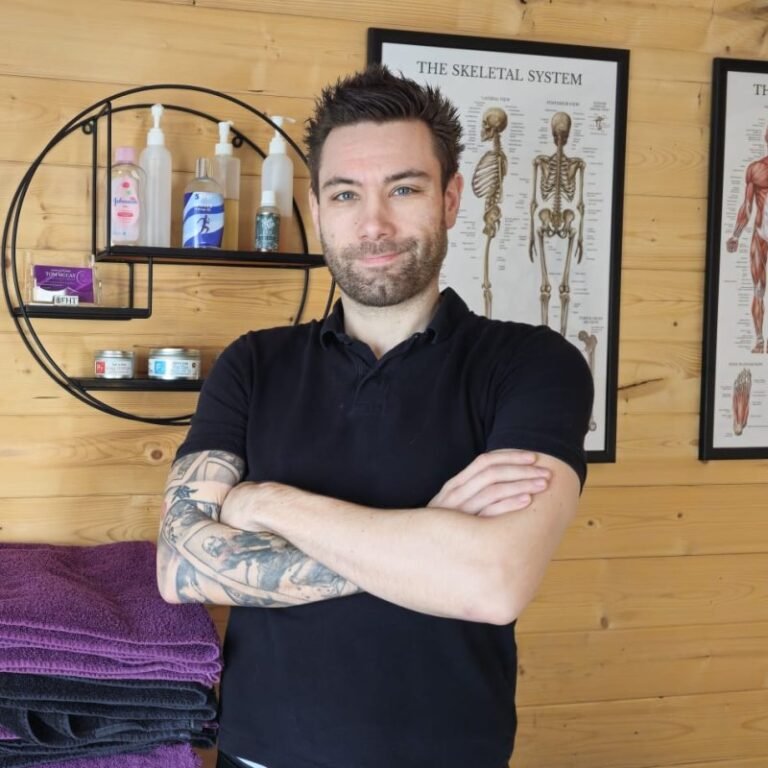
Tom McCay is the founder of Massage Works in Welling. He holds the Level 5 Professional Diploma in Soft Tissue Therapy (Institute of Sport and Remedial Massage, 2024, Distinction in clinical assessment), the VTCT Level 3 Sports Massage Diploma (2023) and an Oncology Massage Certification from The School of Natural Therapies (2025). He treats clients at his Welling clinic and at home across Bexley and South East London.
Copyright 2025 © Massage Works | All Right Reserved