Every office I visit has the same person in it.
They sit by the window, second row from the back. They’ve had “a bit of a neck” for two years. They’ve bought the ergonomic chair and the gel wrist rest and the standing desk converter, and the neck is still there, because the neck was never about the chair. They’ve taken four or five sick days for it this year, though none of them were called that.
Multiply that person across the Health and Safety Executive’s figures and you get the real number: 511,000 British workers with a work-related musculoskeletal disorder in 2024/25, and 7.1 million working days lost to those disorders in a single year. Add the 964,000 reporting work-related stress, depression or anxiety, which is almost double the musculoskeletal figure now, and you have most of what a wellbeing budget is supposed to be for.
I’m Tom McCay, a Level 5 sports massage therapist based in Welling. Most of my week is spent in my own clinic. But some of the most useful work I do is in other people’s offices, warehouses and staff rooms, treating twenty people in a day who would never have booked a massage on their own. This guide is everything I’d want an employer to know before they ask me for a quote.
- What workplace massage is, and what it isn’t
- What eight hours at a desk actually does to a body
- Why employers book it: the three reasons that keep coming up
- What a session day looks like, start to finish
- Why I use a table, not a chair, and why that matters to you
- What it costs and how to get a quote
- Three ways to run it: one-off, standing visit, or hybrid
- How it compares with the fruit bowl, the gym subsidy and the app
- Five mistakes that make a massage day fall flat
- Where I travel: South East London, the City, Kent
- “But what about…” Questions employers ask
What workplace massage is, and what it isn’t
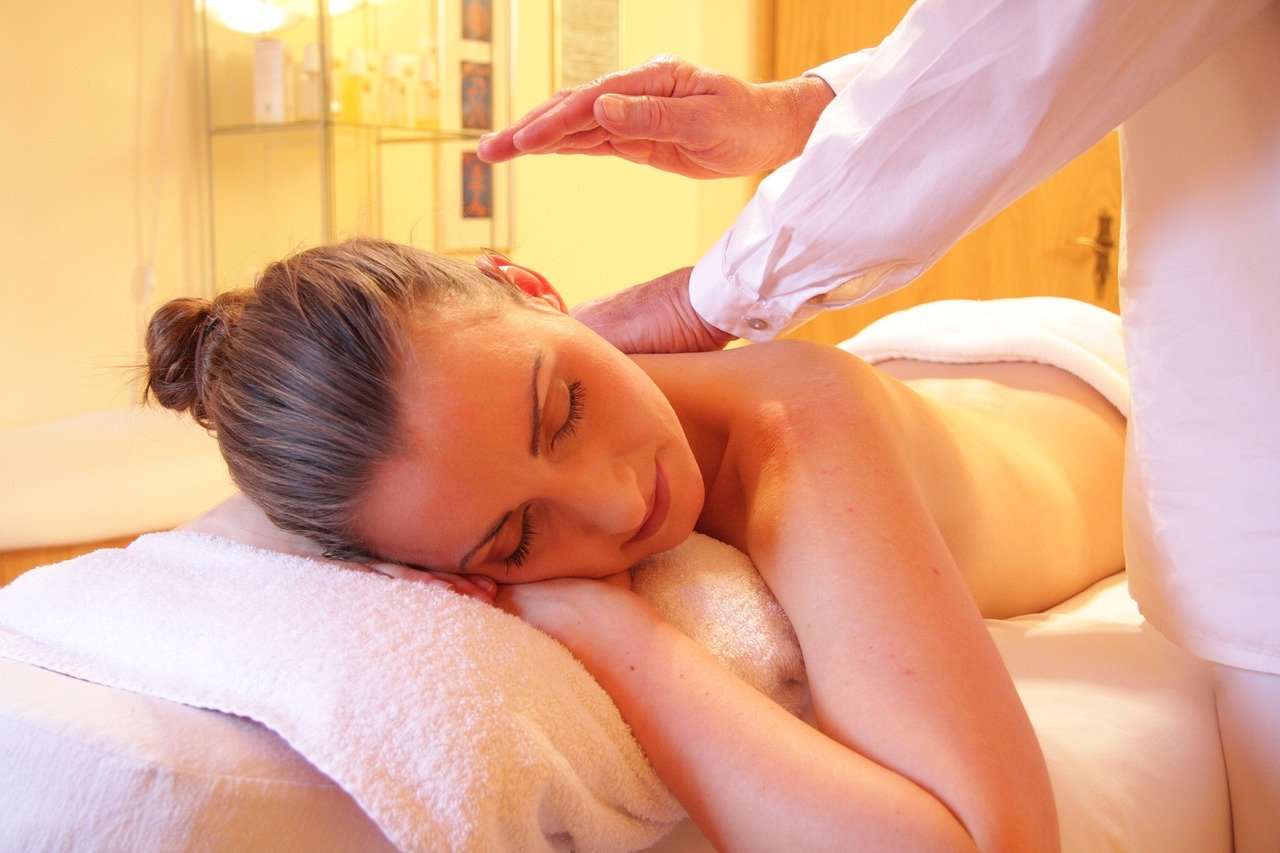
A qualified massage therapist comes to your premises for a half day or a full day, sets up a treatment table in a quiet room with a door, and treats your staff one after another in short slots. Each person gets a focused treatment on the areas office work hits hardest: neck, shoulders, upper back and forearms, with the lower back, hips and legs when the slot allows.
People go back to their desks looser, more alert and, almost without exception, in a better mood than they left it. That’s the whole idea. It isn’t complicated, which is partly why it works.
What it isn’t: a spa day, a gimmick, or a fifteen-minute shoulder rub in the corner of the open-plan floor. Those exist, and they’re the reason some employers have tried “massage” once and written it off. A proper session is a treatment, adapted to the person on the table, delivered by someone trained to assess what they’re looking at.
What eight hours at a desk actually does to a body
This is worth understanding, because it makes the case better than any brochure, and because it’s what I’ll be explaining to your staff one at a time.
Sitting at a screen pulls the head forward of the shoulders. Every centimetre it moves forward adds load to the muscles at the back of the neck and the top of the shoulders, which then spend the day holding a weight they were never designed to hold. Those muscles tighten, shorten and, over months, start producing the headaches and “knots” that half of any office complains about.
Meanwhile the arms are forward on a keyboard, so the chest muscles shorten and the shoulders round. The muscles between the shoulder blades are stretched and weakened and ache in a different way. Lower down, hip flexors shorten from sitting, the glutes switch off, and the lower back takes over work it should never be doing, which is why lower back pain is so common in people who never lift anything heavier than a laptop.
What desk work costs British employers
Health and Safety Executive, work-related ill health, Great Britain 2024/25
- Head forward of shoulders loads the neck and upper trapezius: headaches, “knots”
- Arms forward on a keyboard shortens the chest, rounds the shoulders, strains the upper back
- Hips bent for eight hours shortens hip flexors, switches off glutes, overworks the lower back
None of that is a medical condition. It’s a predictable, mechanical response to a posture held for too long, and it responds predictably to the right treatment: release the shortened muscles, ease the overworked ones, and give the person two or three things to do differently. A therapist who sees the same office every month watches those problems fade in the people who act on the advice, and stay put in the people who don’t.
Why employers book it: the three reasons that keep coming up
They lead to different kinds of booking, so it’s worth knowing which one you are.
1. Fewer necks, backs and sick days
Neck, shoulder and back pain are the most common reasons for short-term absence in desk-based teams, and the most common reason people are at their desks working at half speed. Regular massage reduces the tension that drives most of it, and gives each employee a few minutes with someone who can tell them, specifically, what their desk set-up is doing to them. This is the reason to book monthly or quarterly rather than once.
2. Stress and morale
A massage doesn’t fix a bad manager or an impossible deadline. But it’s one of the very few wellbeing benefits that staff actually use, actually enjoy and talk about afterwards, which is more than can be said for most of what’s in the handbook.
3. Recognition
End of a big project, end of peak season, a team that worked weekends. A massage day is a visible, personal thank-you that costs less than a team dinner and doesn’t involve anyone’s diet.
What a session day looks like, start to finish
How a workplace massage day runs
From first email to the follow-up
Before
Staff count, date and postcode. Slot length, start time and room agreed. Quote by return.
Set-up
Tom brings table, towels and oils. You provide a warm room with a door, roughly 3 x 3 m, and a chair.
Check-in
Two minutes per person: injuries, conditions, pregnancy, areas to avoid. Treatment through clothing if preferred.
Treatment
Table-based, not chair. Neck, shoulders, upper back, forearms; lower back and legs when the slot allows.
Afterwards
Each person leaves with one or two desk changes. Anonymised pattern note for the employer on request.
Before the day
You tell me how many people want a slot and how long you can give the day. From that we agree slot lengths, a start and finish time, and a room. Shorter slots mean more people seen; longer slots mean a fuller treatment per person. A half day suits a small team or a taster; a full day suits a department.
I bring the treatment table, couch roll, towels, oils and everything else. You provide a warm room with a door, roughly three by three metres, a chair, and somewhere nearby to wash hands.
On the day
Staff book their slot on a simple list, which you can run or I can. Each person has a two-minute check-in before their treatment: injuries, medical conditions, pregnancy, recent surgery, areas to avoid. Then the treatment itself. Nobody undresses beyond what’s needed, everyone is covered with a towel, and anyone who prefers to be treated through clothing can be. Each slot ends on time so the list doesn’t drift and the 3pm person doesn’t lose out because the 11am person overran.
After the day
Each person leaves with one or two specific things to do at their desk to keep the benefit going: a stretch, a change of screen height, a reminder to stand up. Anyone who needs further treatment can book at my Welling clinic or arrange a home visit at the standard rate.
If you’d like it, I’ll give you a short, anonymised note of the patterns I saw. It’s often the first time anyone has told an office that half its staff have the same shoulder for the same reason, and it’s usually something you can fix for the price of a few monitor arms.
What you provide, what we bring
Simpler to set up than most wellbeing events
You provide
- A warm, private room with a door (about 3 x 3 m)
- One chair
- Somewhere nearby to wash hands
- A slot list circulated a week ahead
- A day when most of the team is in
We bring
- Treatment table, couch roll and towels
- Oils and everything for the treatment
- A Level 5 sports massage therapist, also oncology-certified
- Check-in and adaptation for every person
- Desk advice each person can act on
Five things that make a day fall flat: a cold glass-walled room, no promotion, slots too short, a Friday when half the team is at home, no follow-up.
Why I use a table, not a chair, and why that matters to you
A lot of corporate massage is done on a massage chair: the kneeling, face-forward kind. It’s quick to set up and it looks tidy in a photo. I don’t offer it, and I want to be upfront about that because some employers specifically search for “chair massage”.
A chair gives access to the back and shoulders through clothing and not much else. A treatment table lets me reach the neck, shoulders and upper back properly, treat the lower back and legs where the real problems often start, and change the position for anyone who can’t sit forward: pregnant staff, anyone with a bad back, anyone post-surgery. It takes a few minutes longer per person and the result is noticeably better.
If what you want is specifically chair massage, I’m not the right fit and I’d rather say so now than disappoint you on the day.
What it costs and how to get a quote
Every workplace is different, so pricing is agreed per booking rather than from a fixed menu. The cost depends on three things:
- Whether you want a half day or a full day
- How many staff will be seen, which sets the slot length
- How far your site is from Welling. Up to 30 km is standard. Beyond that, a travel fee may be added.
Send me the number of staff, the date and the postcode and you’ll have a clear quote by return, with no obligation.
For context: the HSE’s figures work out at roughly fourteen working days lost per person with a work-related musculoskeletal disorder each year. A single well-run massage day costs less than one week of sickness absence for one employee, and a standing monthly visit costs less per head than most gym-membership schemes that nobody uses.
Three ways to run it: one-off, standing visit, or hybrid
The one-off day
Best for wellbeing weeks, thank-yous and trying the idea out. Quick to arrange, easy to budget, popular on the day. Its limitation is that one treatment eases tension for a week or two, and then the desk wins again.
The standing visit
Monthly or quarterly, same room, same list, priced in advance. This is where sickness absence and complaints actually move, because the same people are seen repeatedly, early problems are caught before they become absence, and staff treat it as part of how the company works rather than a treat. It also makes the budgeting conversation easy: one line, twelve times a year.
The hybrid
A day on site each quarter, plus the option for staff to book at the Welling clinic between visits at the standard rate, or for the employer to fund a set number of clinic sessions for people with a specific problem. Good for smaller teams where a full day on site is more than they need, and for employees who’d rather be treated away from the office.
| One-off day | Standing visit | Hybrid | |
|---|---|---|---|
| Best for | Wellbeing weeks, thank-yous, a first try | Reducing absence and complaints over time | Small teams, mixed needs |
| Effect lasts | One to two weeks | Cumulative; builds each visit | Cumulative for those who use the clinic |
| Budgeting | Single cost | Fixed monthly or quarterly line | Quarterly line plus a session allowance |
| What you learn | Whether staff want it again | Which desks and roles cause which problems | Who needs more than a day can give |
How often is enough?
For a team with ordinary levels of desk strain, monthly keeps most people ahead of their problems. Quarterly works for a healthier or more active team, or where the budget only stretches that far. Teams with physical jobs, long shifts or a lot of driving benefit from monthly. If you’re unsure, start with a one-off day, ask staff afterwards whether they’d want it again, and let the answer decide.
How it compares with the fruit bowl, the gym subsidy and the app
Most wellbeing budgets go on things that look good in a staff handbook and are barely used. A gym membership subsidy is taken up by the people who already go to the gym. An employee assistance helpline is valuable but invisible until someone is in crisis. A meditation app is downloaded in January and opened twice. Fruit is fruit.
Massage is different in one specific way: take-up. When a slot list goes round, it fills, including with the people who never touch the other benefits. Those people come back to their desks and talk about it. For a wellbeing benefit, being used is most of the battle.
It’s also the only item on that list that comes with a trained pair of hands and eyes. A therapist treating twenty people from one office sees patterns no survey picks up: the team on the second floor all have the same shoulder because of the same monitor arms; the warehouse staff have the same lower back because of the same trolley. That information, offered in general terms and never about an individual, is worth more than the massage.
Five mistakes that make a massage day fall flat
1. The wrong room. A cold meeting room with glass walls, or a corner of the open-plan floor, kills it. A warm room with a door is the single biggest factor in how people rate the day.
2. No promotion. An email the afternoon before gets half the take-up of a list that goes round a week ahead with one line explaining that treatment is through clothing if preferred.
3. Slots too short. Trying to fit everyone in by cutting slots to the bone means nobody gets a real treatment. Better to run two days than one rushed one.
4. The wrong day. A Friday afternoon when half the team works from home is the classic. Pick the day most people are in.
5. No follow-up. A single day with no plan for the next one is a nice afternoon and nothing more. Decide in advance whether this is a one-off or the first of a series, and say so.
Where I travel: South East London, the City, Kent
I’m based in Welling and cover workplaces up to 30 km away as standard. That takes in Bexleyheath, Dartford, Bromley, Greenwich, Lewisham, Croydon, Canary Wharf, the City, and much of north Kent. Further afield is possible with a travel fee; ask.
Weekday daytime is standard. Saturdays and early evenings can sometimes be arranged for shift-based teams.
Who I am, for the person who has to sign this off: Level 5 Professional Diploma in Soft Tissue Therapy (the highest practitioner level in the UK), certified oncology massage therapist, 4.9 stars on Google from more than 30 reviews. The oncology training matters more in a workplace than you might expect: it means colleagues going through or recovering from cancer treatment can be treated safely, with the right adaptations, rather than being quietly left off the list.
Tom is an excellent massage therapist! He makes you feel very comfortable and relaxed and he clearly explains what he’s doing to help you understand where your aches and pains come from.
Google review
Very professional and took the time to learn about the somewhat unique nature of my spine and ribcage before starting and adapted the massage to suit perfectly. Never actually had a massage before but am now a convert.
Google review, first-time client
“But what about…” Questions employers ask
How many people can you see in a day?
It depends on slot length. Shorter slots cover more people; longer slots give a fuller treatment. Once I know your numbers and your hours I’ll suggest a split, and you choose.
Do you offer chair massage?
No. I work on a treatment table only, because the results are better and the same slot can cover the lower back and legs. If you specifically want chair massage, I’m not the right fit, and I’d rather say so now.
What do you need from us?
A warm, private room, a chair, somewhere to wash hands, and a list of who’s coming. Everything else is brought.
Some of our staff have health conditions.
Usually fine. Each person has a short check-in first, and treatment is adapted or, occasionally, declined where it wouldn’t be safe. Pregnant staff (after the first trimester) and colleagues in cancer treatment can both be treated by a therapist with the right training, which I have.
Is it a taxable benefit?
That depends on how it’s provided and how often. Ask your accountant or check HMRC’s guidance on staff welfare and trivial benefits before you decide how to run it.
How far will you travel?
Up to 30 km from Welling as standard, which covers most of South East London, the City and north Kent. Further is possible with a travel fee.
Can we book a regular slot?
Yes, and it’s the arrangement that gives the best results. A standing monthly or quarterly date is agreed in advance and priced accordingly.
We’re a sports club, not an office.
Then you want the sports team massage page: same idea, at your ground, before or after matches.
Read next
- Office and workplace massage: the service page
- Sports team massage for clubs
- Deep tissue massage, for the desk worker who’d rather come to the clinic
Get a quote
Send the number of staff, your preferred date and the postcode, and you’ll have a quote and available dates back promptly. If you’re not sure whether a half or full day is right, say roughly how many people and I’ll suggest it.
Workplace massage
Book a workplace massage day
Send the number of staff, your preferred date and the postcode, and you will have a quote and available dates back promptly. Up to 30 km from Welling as standard.
See you at the office,
Tom McCayLevel 5 Sports Massage Therapist and Certified Oncology Massage Therapist
Massage Works, Welling
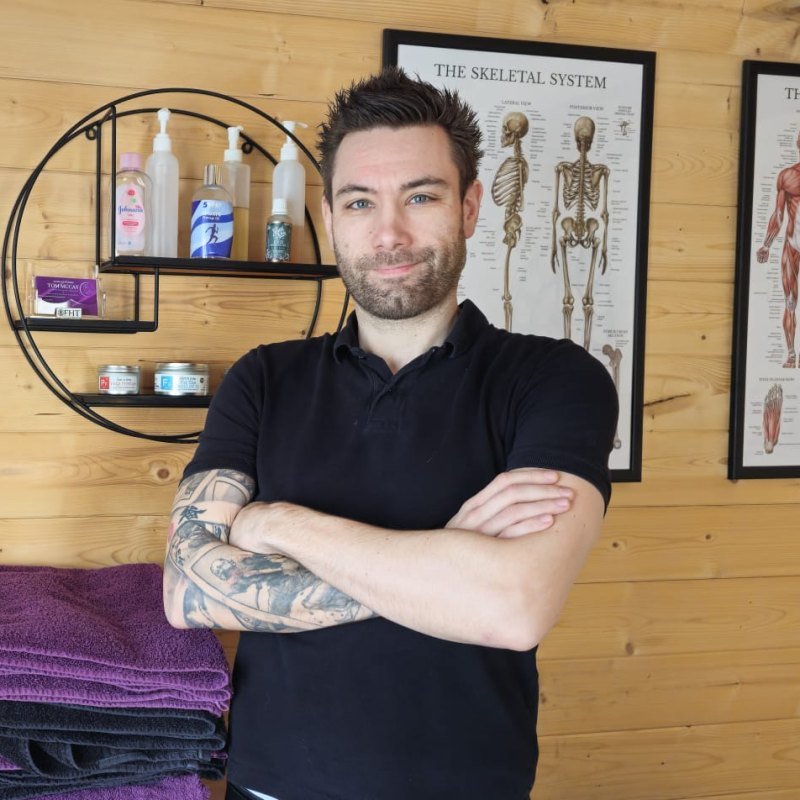
Tom McCay is the founder of Massage Works in Welling. He holds the Level 5 Professional Diploma in Soft Tissue Therapy (Institute of Sport and Remedial Massage, 2024, Distinction in clinical assessment), the VTCT Level 3 Sports Massage Diploma (2023) and an Oncology Massage Certification from The School of Natural Therapies (2025). He treats clients at his Welling clinic, at home, and on site at workplaces and sports clubs across South East London and Kent.