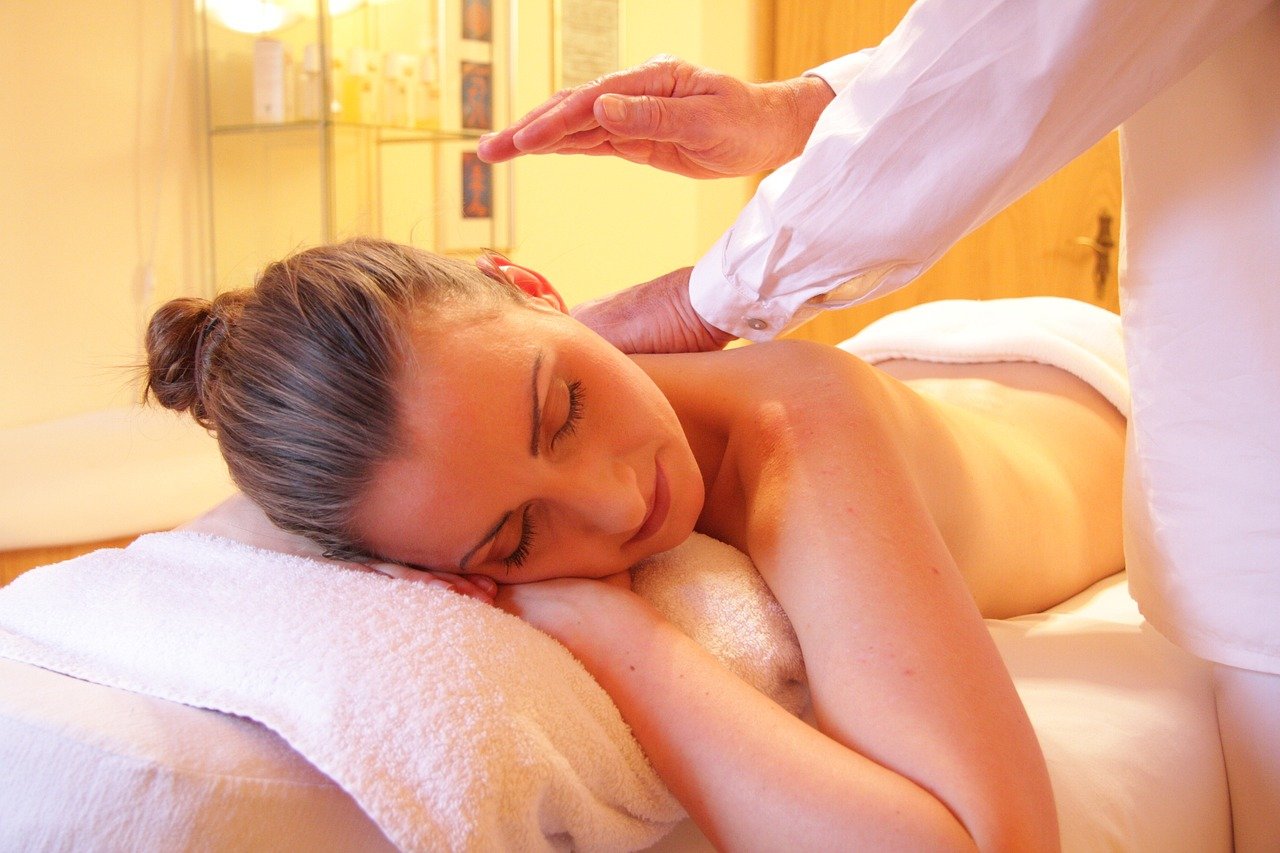
Summary: I treat pregnant clients from 13 weeks, the start of the second trimester, after they have spoken to their midwife, and not before. The session is done lying on your side with pillows, never flat on your back after the early weeks, with gentler pressure than a sports massage and nothing deep over the belly, the base of the spine or the inner legs. The NHS lists massage among the things that can help with back pain in pregnancy; it does not list it for swelling, and pelvic pain belongs with an obstetric physiotherapist first. If you have a sudden increase in swelling, a very bad headache or problems with your vision, call your midwife or labour ward today, not me.
The phone call usually comes from someone who has already asked their midwife and been told “yes, as long as the therapist knows what they’re doing.” Then they look for one, find a dozen spa pages promising to melt stress away, and ring me to ask the question the spa pages never answer: what actually happens, and is it a sensible thing to do at twenty-six weeks with a back that hurts every evening?
This is my answer, written out properly. It covers when I will and will not treat you, what the session involves and why it is set up the way it is, what the NHS and the research say about back pain, pelvic pain, swelling and sleep in pregnancy, and the handful of symptoms that should send you to your maternity unit rather than to a massage couch. The booking details are on my prenatal massage page, and my guide to massage in Welling covers how any first appointment with me works; this is the long version for people who want to understand the pregnancy side first.
Every clinical statement below comes from NHS pregnancy guidance or the Cochrane Library, named where it appears. Where the evidence for massage is thin, and in pregnancy it is thinner than you might expect, I say so.
When I treat, and when I say no
From 13 weeks. Not before. Tiredness is common in pregnancy, especially in the first 12 weeks, as the NHS notes, and those are the weeks my prenatal page has always excluded. I do not treat during them, and I do not make exceptions. I am not claiming that massage is shown to cause harm in those weeks. It is a caution that costs you nothing and lets you arrive in the second trimester with one less thing to wonder about.
From 13 weeks onward I ask three things before the first session. That you have told your midwife or GP you are planning to have massage and nobody has said not to. That you tell me about anything that is not straightforward in this pregnancy, including anything you have been asked to keep an eye on. And that you tell me on the day if anything has changed since you booked.
There are situations where I will not treat until you have been seen, and I would rather lose the booking. They come from the NHS, not from me.
The NHS page on back pain in pregnancy says to contact your GP or midwife urgently if you have back pain and you are in your second or third trimester, because it could be a sign of early labour; if you also have a fever, bleeding or pain when you pee; or if the pain is in one or both sides under your ribs. It says to call 999 or go to A&E if you lose feeling in one or both legs, your bottom or your genitals. If any of that describes you, the massage waits.
The NHS guidance on swollen ankles, feet and fingers has its own list, and it is the one people are least likely to connect with a massage booking: call your midwife, GP or labour ward immediately if you have a sudden increase in swelling in your face, hands or feet, a very bad headache, problems with your vision such as blurring or flashing lights, severe pain just below your ribs, heartburn that will not go away, or nausea and vomiting. The NHS says a sudden increase in swelling can be a sign of pre-eclampsia. If someone arrives with new swelling in their face and hands, I am not the appointment they need that day, and I will say so and help them make the call.
Massage is a comfort measure, not a check-up. Nothing I do on the couch replaces the midwife appointments, and nothing I notice should be taken as reassurance that something is fine. If I think you need to be seen, I will tell you, and I would rather be wrong about that than quiet.
What a session actually involves
If you have read my guide to massage in Welling you know a first appointment with me starts with questions. In pregnancy there are more of them: how many weeks, how this pregnancy has been, what your midwife has said, where it hurts and when, how you are sleeping, whether you have any swelling and whether it came on gradually or suddenly. Ten minutes of that before you lie down is not me being slow. It is the part that makes the next fifty minutes appropriate for you rather than for a generic pregnant person.
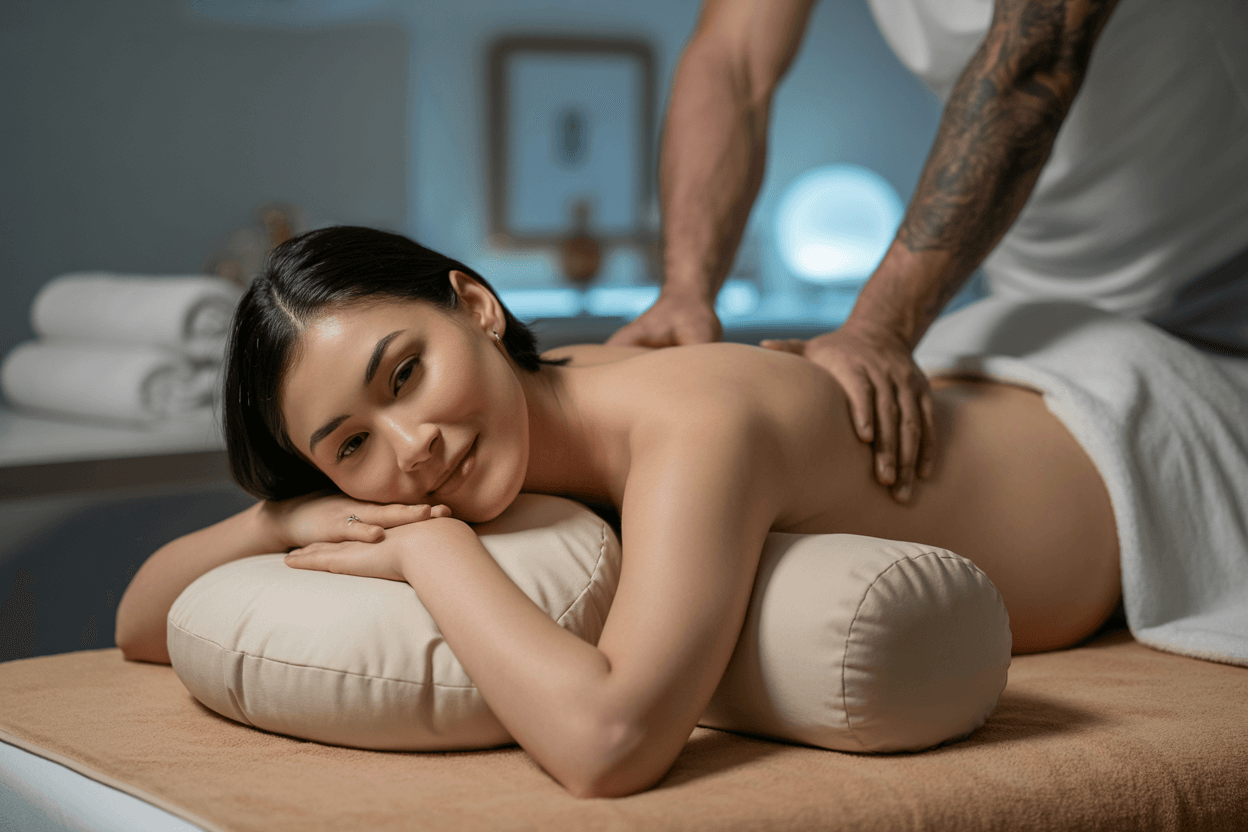
You lie on your side, never flat on your back. The couch is set up with a pillow under your head, one between your knees and ankles, and a long one in front to rest your top arm and bump on, so nothing is hanging or twisting. The NHS advice on sleep in pregnancy is that the safest position to fall asleep in is on your side, and that after 28 weeks falling asleep on your back is linked to a higher risk of stillbirth, possibly through blood flow to the baby. I apply the same principle to the couch from the second trimester, whatever the week. For the upper back and shoulders I may sit you up, semi-reclined against a wedge, as an alternative position in late pregnancy.
You undress only as far as you are comfortable and you are covered with towels throughout, with only the area I am working on uncovered. You can keep a vest on if you prefer.
The pressure is lighter than a sports massage, and the areas are chosen. Pregnancy massage at my clinic is mostly long, slow, even strokes through the upper back, shoulders and neck, the lower back and hips worked gently and only where you want them worked, the legs stroked towards the heart with light pressure, and the feet. There is no deep pressure over the belly, none where the spine meets the pelvis, and none into the inner thigh or the back of the calf. I do not do deep tissue work or trigger point work in pregnancy, and if a therapist offers you that, ask them why.
The honest reason for all of this is not that there is a proven danger from firm pressure. It is that your ligaments are softer than usual, as the NHS explains, and I cannot see what is going on underneath. Gentle is the correct response to not knowing.
This is roughly how the side-lying set-up looks, with the pillows doing most of the work.
A pregnancy massage is 60 minutes for £50 or 90 minutes for £80. The list is on the pricing page. For a first pregnancy session I suggest 60 minutes, and we can go longer next time if you want to.
What it is for: the four complaints that bring pregnant clients to me
Back pain. The NHS calls backache very common in pregnancy, especially in the early stages, and gives the reason plainly: the ligaments naturally become softer and stretch to prepare you for labour, which means the muscles of the back do more holding than they are used to. Its list of things that help includes bending your knees to lift, flat shoes, a supportive mattress, splitting shopping between two bags, a back care class, enough rest, and, in the NHS’s own words, “have a massage or a warm bath”. That is the sentence that puts massage on the list. Note what sits either side of it: posture, shoes, rest. Massage is one of several ordinary comforts, not a treatment that stands alone.
Pelvic girdle pain. This is the one I want to be most careful about. The NHS page on pelvic pain in pregnancy describes pelvic girdle pain, PGP, as stiffness or uneven movement of the pelvic joints, affecting up to one in five pregnant women to some degree: pain over the pubic bone, across one or both sides of the lower back, into the perineum or thighs, often with clicking or grinding and worse with walking, stairs, standing on one leg, turning in bed or parting the legs. The NHS route for it is referral to a physiotherapy service that specialises in obstetric pelvic joint problems, with exercises and, where needed, a support belt or crutches.
I do not treat PGP. If what you describe sounds like it, I will tell you to ask your midwife for the physiotherapy referral, and I will say it before you have paid for anything. What I can do, alongside the physiotherapist and with their agreement, is gently work around the muscles of the pelvis and back without presenting massage as a treatment for PGP. That is a supporting role and I will not pretend otherwise.
Swelling. Some swelling in the legs, ankles, feet and fingers is normal in pregnancy because your body holds more water and the growing womb affects blood flow in the legs. The NHS advice is feet up when you can, regular walks, comfortable shoes, not standing for long, and foot exercises. It does not mention massage, and I am not going to tell you that light strokes up the calf reduce swelling, because I have no evidence that they do. What I can say is that gentle leg work is pleasant when your legs feel heavy, and that the sudden swelling described above is a different thing entirely and goes straight to your midwife.
Sleep and the simple matter of being touched kindly for an hour. The NHS says tiredness is common in pregnancy and suggests relaxation techniques among other things. I will not claim massage improves your sleep, because that is a measurable outcome and nobody has measured it for me. I can say that the session gives you an hour lying on your side, warm and supported, while I work slowly through your back.
What the research says, which is less than you would hope
I would rather you heard this from me. The Cochrane Library’s review of treatments for low back and pelvic pain in pregnancy, 34 randomised studies and 5,121 pregnant women, is the systematic review on the subject. It found that land-based exercise reduced back pain and disability, on low-quality evidence; that an eight to twelve week exercise programme reduced the number of women reporting back and pelvic pain, on moderate-quality evidence; and that osteopathic manipulation helped in individual studies. On pelvic pain alone the evidence was thin.
It does not evaluate massage at all. Manual therapy appears only as one part of a mixed programme. The reviewers’ own conclusion is that there is simply not enough good quality evidence to make confident decisions about treatments for these complaints.
So here is where that leaves us. The treatment with the strongest evidence in that review is exercise, ideally a class with a qualified instructor, which the NHS also recommends. Massage is on the NHS list of comforts and is absent from the research. I offer it as what it is: an hour of adapted massage, with no promise about how you will feel afterwards, and with a standing instruction to keep moving and to see the physiotherapist if the pain is the pelvic kind.
If you were active before pregnancy and want to stay that way, the questions about what to keep doing are better ones for your midwife and a prenatal exercise class than for me, though the sports massage side of my work means I am used to talking to runners and gym-goers about what their body is telling them.
The version of this I tell clients in the room: I can offer an hour of gentle, adapted massage. Exercise, rest and your physiotherapist remain important over the rest of your pregnancy. Book me for the hour, and do the other things.
Who comes, and from where
About a third of my clients come from outside Welling. Bexleyheath, Sidcup, Eltham, Plumstead, Dartford and Greenwich are the usual postcodes. Searches for pregnancy massage in Plumstead already find my prenatal page.
If getting to Welling in late pregnancy is the obstacle, I do home visits up to 30 kilometres from the clinic, with a travel fee possible for the longer distances, and I bring the couch and the pillows. Get in touch with your postcode and your due date.
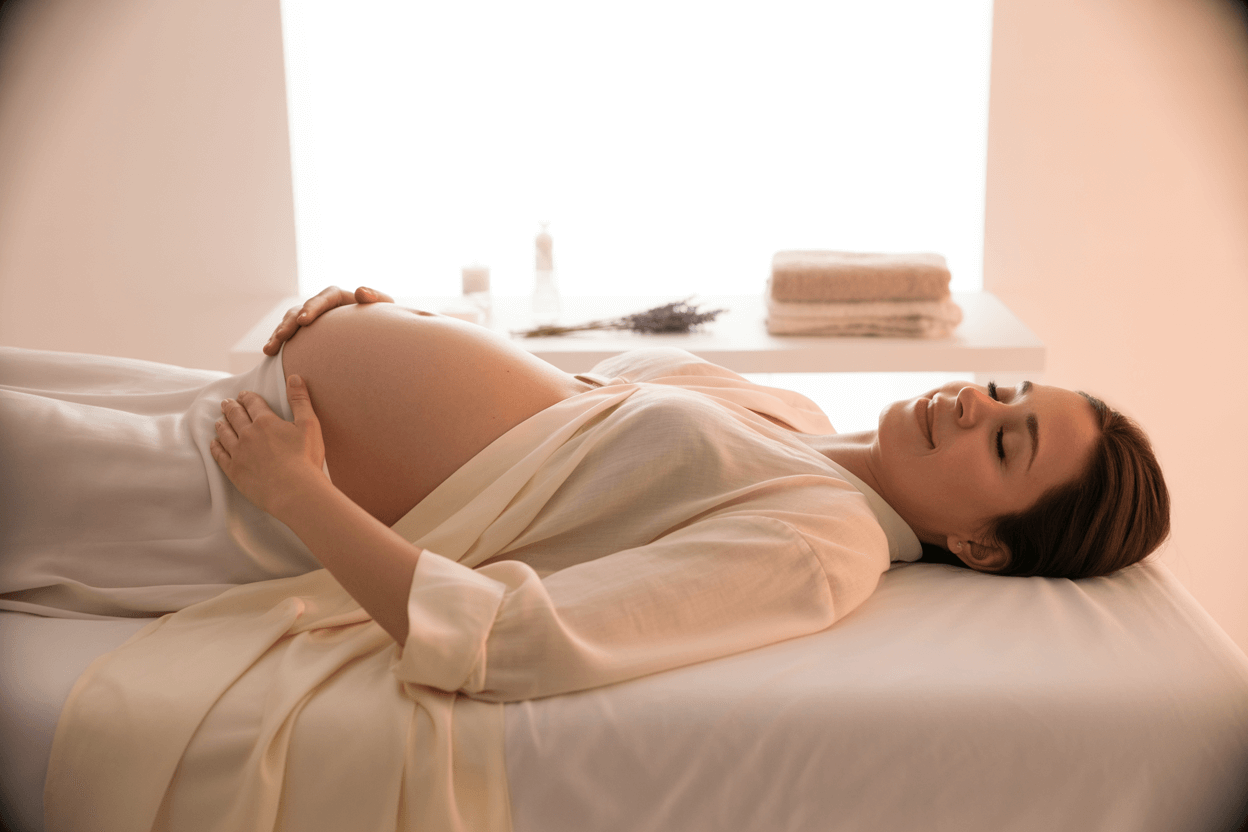
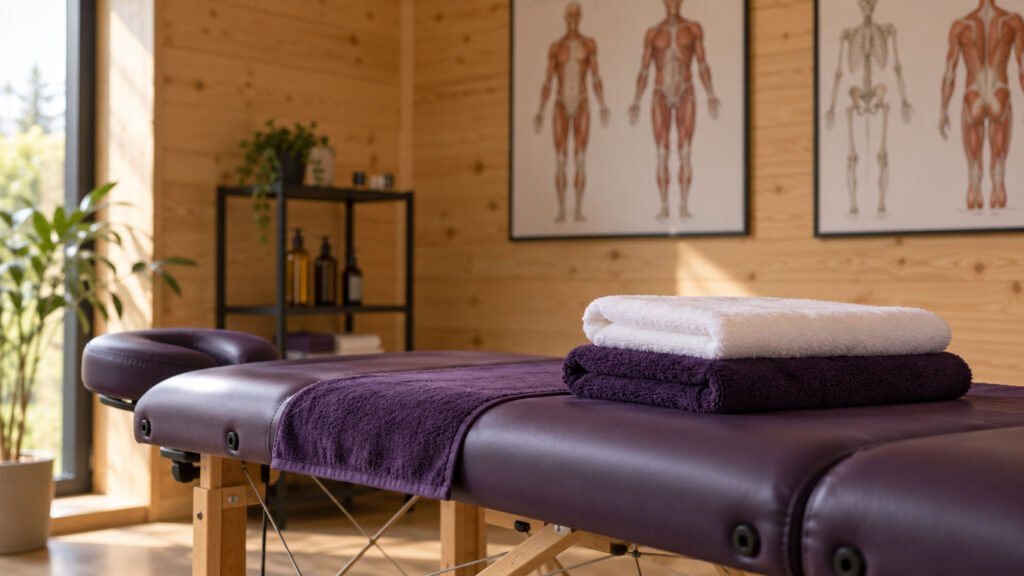
This is the room you would come to, set up for a pregnancy session.
“But what about…” Your questions, answered honestly
“Is pregnancy massage safe?”
I will not give you the one-word answer, because I do not think anyone honestly can. What I can tell you is that the NHS lists massage among the things that may help a pregnant back, that I do not treat in the first trimester, that you lie on your side with pillows rather than flat, that the pressure is light and the deep areas are left alone, and that I will not treat you at all if you have any of the symptoms on the NHS urgent lists above. Those are the things within my control. Whether massage is right for your pregnancy is a question for your midwife, and I want you to have asked it before you book.
“Can massage bring on labour?”
I have no evidence that it can and I do not use any technique that claims to. Nothing I do is intended to start anything, and I avoid deep pressure through the base of the spine, the belly and the inner legs for comfort reasons rather than because I believe a particular spot is a switch. If you are past your due date and hoping for help, I am the wrong person; talk to your midwife.
“I have PGP. Will massage help?”
Not on its own, and I will not take the booking on that basis. The NHS route for PGP is an obstetric physiotherapist, who can assess the joints and give you exercises and, if needed, a support belt. Ask your midwife for the referral. Once you are under their care, massage for the muscles around the pelvis can sit alongside it, and I am happy to work with whatever plan they have given you.
“My legs and feet are swollen. Will massage reduce it?”
I do not know, and the NHS guidance on swelling does not list massage among the things that help, so I am not going to claim it. Gentle leg strokes feel good when your legs are heavy and that is reason enough to include them. If the swelling came on suddenly, or your face or hands are swollen, or you have a bad headache or your vision has changed, that is a call to your midwife or labour ward today, before any appointment with me.
“How often should I come?”
There is no schedule I can justify from evidence, so I will not invent one. Some people come once a month through the second and third trimester, some come when their back is bad, some come once to see what it is like. Book what you want and change it as you go; there is no package to commit to.
“Can I book if I am not showing yet?”
If you are 13 weeks or more and have spoken to your midwife, yes. If you are under 13 weeks, no, and I will ask you the week when you book.
A last word before you book
Pregnancy massage, done the way I do it, is a modest thing: an hour on your side, warm and supported, with the muscles that are doing more work than usual handled gently by someone who asks the right questions first. It is on the NHS list of things that may help a sore back. It is not a treatment for pelvic pain, it does not reduce swelling as far as anyone has shown, and it is never a substitute for the midwife or the physiotherapist. If that honest version sounds like what you want, I would be glad to see you from 13 weeks.
See you at the clinic,
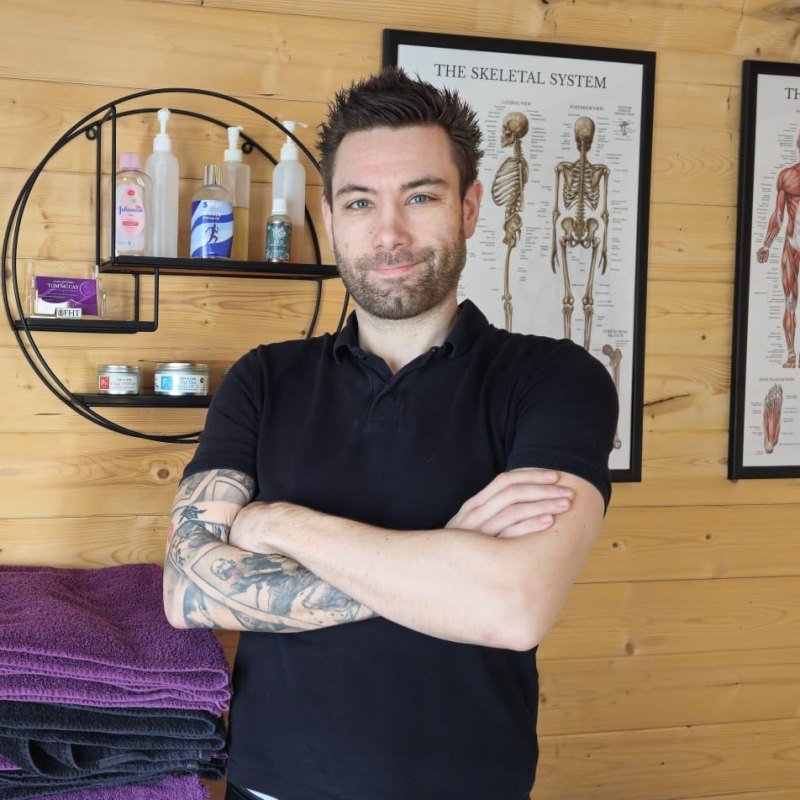
Tom McCay, Level 5 Sports Massage Therapist, Massage Works, 15 St Michaels Road, Welling DA16 2AH. The training behind the title is on the about page, and the prenatal page sets out how I work with pregnant clients.
If you are past 13 weeks, have spoken to your midwife, and want to talk it through before you decide, book a 60-minute session and bring your questions.
15 St Michaels Road, Welling DA16 2AH
Book a pregnancy massage with Tom McCay in Welling
- From 13 weeks
- Online booking
- Free parking nearby