The question people ask me most often about oncology massage is not “will it help?” It’s “is it allowed?”
That tells you something about how people in cancer treatment are made to feel about their own bodies. Every appointment is a list of things they mustn’t do, eat, touch or lift. By the time someone types “is massage safe during chemotherapy” into Google at midnight, they’ve usually already decided they’d like one and are looking for permission.
So let me give you the honest version, which is more useful than permission.
For most people, at most stages of treatment, massage is not only allowed but recommended by the people who should know. Cancer Research UK says so. Macmillan says so. Many UK cancer centres now offer it on the ward. The condition is that it’s done by someone trained to adapt it, and with your medical team’s knowledge.
I’m Tom McCay. I run Massage Works in Welling, and alongside my Level 5 diploma in soft tissue therapy I hold an oncology massage certification from The School of Natural Therapies. Very few therapists in this part of London and Kent do, which is why people travel from well beyond Bexley to see me, and why I wrote this page.
- Is massage safe during cancer treatment? What Cancer Research UK actually says
- Why cancer used to be on the “do not touch” list, and why it isn’t any more
- What changes in an oncology massage: the seven adaptations
- What the research shows, and what it doesn’t
- When in a chemotherapy cycle to book
- What happens at an appointment
- After breast cancer surgery: the most common reason people come
- Lymphoedema: what massage can and cannot do
- Who it helps, including the people who never book for themselves
- How to tell whether a therapist is qualified for this
- Prices, home visits and getting to the clinic
- “But what about…” The questions people are nervous to ask
Is massage safe during cancer treatment? What Cancer Research UK actually says
I’d rather quote the people with the authority than ask you to take my word for it. Cancer Research UK’s page on massage makes three points, and every oncology massage session I give is built around them:
- Talk to your cancer doctor or specialist nurse before using massage therapy. A trained therapist will ask whether you have.
- People with cancer should avoid very deep massage. Oncology massage is never deep.
- Avoid general massage to your arms or legs if they are swollen because of lymphoedema. That limb is left alone; the rest of you can still be treated.
They also address the fear that stops many people booking at all: that massage could spread cancer by moving cells around the body. In their words, no research has proved this to be true. Macmillan says the same.
That’s the safety case in four lines. Everything else on this page is detail.
Why cancer used to be on the “do not touch” list, and why it isn’t any more
If you had a massage course handbook from twenty years ago, cancer would be listed under “contraindications”: the conditions a therapist must refuse. That’s where the fear comes from, and it’s worth understanding why it was there.
It wasn’t because massage had been shown to harm people with cancer. It was because ordinary massage training didn’t cover how to adapt a treatment for a body being changed by surgery, drugs and radiation. Nobody taught therapists what a port was, or what a low platelet count meant for pressure, or which side to avoid after lymph nodes were removed. So the safe default was to say no.
Oncology massage training exists to replace that “no” with a set of specific adaptations. It covers the treatments and their side effects, the contraindications that still apply, positioning, pressure, lymphoedema risk, infection control and, just as importantly, when to stop. When I say I’m trained in it, that’s what I mean: not that I’m gentle, but that I know what to change and why.
What changes in an oncology massage: the seven adaptations
Here’s what a trained therapist does differently, compared with the sports or deep tissue massage you might have had before diagnosis.
Standard massage vs oncology massage
Seven things a trained therapist changes, built on Cancer Research UK’s guidance
| Standard massage | Oncology massage | |
|---|---|---|
| Pressure | Firm to deep | Light; lighter still with low platelets or blood thinners |
| Position | Face-down as standard | Side-lying or seated around ports, lines, surgery, breathlessness |
| Areas worked | Whole body | Avoids tumour sites, surgery, radiotherapy skin, bone involvement, at-risk limbs |
| Length | Full 60 or 90 minutes | As long as you can take that day; the rest is rest |
| Pace | Brisk, active | Slow and predictable, for nervous-system calm |
| Infection care | Standard hygiene | Rearranged if either of you has a cold; stricter hygiene |
| Before you book | Nothing needed | Medical team’s agreement; a treatment summary helps |
Pressure
Lighter than any sports or deep tissue work, and lighter again if your platelet count is low, you bruise easily, or you’re on blood thinners. Deep pressure is the one thing Cancer Research UK specifically warns against, and there’s no version of oncology massage that includes it.
Position
Side-lying or seated instead of face-down if you have a port or PICC line, a recent surgical site, a stoma, breathlessness, bone pain, or simply can’t get comfortable on your front. Pillows do a lot of the work.
Areas avoided
Tumour sites. Recent surgery and drains. Skin in a current radiotherapy field. Areas of known bone involvement. Any device under the skin. Any limb at risk of, or affected by, lymphoedema. The list is specific to you, and I’ll go through it with you before we start.
Length
Shorter when fatigue is high. A 60-minute booking does not mean 60 minutes of hands-on work if 30 is what you can take that day. The rest is rest, and you pay for the booking, not the minutes.
Pace
Slower. Oncology massage is as much about calming the nervous system as about muscles, and slow, predictable strokes do that better than anything else. Many people fall asleep. That’s the point, not a problem.
Infection care
If your immune system is suppressed, the session is rearranged if either of us has so much as a cold, and hygiene is stricter than usual. I’d rather lose a booking than give you an infection.
Skin
Chemotherapy and radiotherapy can leave skin dry, fragile or sore. Oils are chosen to suit, and treated skin is avoided or worked very lightly indeed.
What the research shows, and what it doesn’t
I’m wary of therapists who overclaim, so I’ll be precise.
The most consistent finding across studies of massage in cancer care is a reduction in anxiety. Many studies also report less pain, less fatigue and better sleep, mostly in the short term. A Cancer Research UK-funded trial, for example, found that patients given four sessions of massage had measurably lower levels of anxiety and depression than those who received none. That body of evidence is why so many UK hospitals and cancer centres now offer massage on the ward, often free; if yours does, use it.
What the research does not show is any effect on the cancer itself. Massage does not treat cancer, slow it, or boost your immune system against it, and anyone who tells you otherwise is selling something.
The honest claim is narrower and still worth a great deal: for an hour, someone trained to be careful with you does nothing except make you feel better, and the effect on sleep and mood lasts for days. In the middle of treatment, that is not a small thing.
When in a chemotherapy cycle to book
Chemotherapy is usually given in cycles of two or three weeks, and how you feel changes across each one. Knowing the pattern helps you book a massage for the day you’ll actually enjoy it.
When in a chemotherapy cycle to book a massage
General pattern only; follow your medical team
Usually the best window
A typical three-week cycle; your own pattern may differ, so ask your chemotherapy nurse. A gentle massage is not ruled out at other points; the lower you feel, the lighter and shorter it should be.
The first few days after a dose are often the worst for nausea and tiredness. The middle of the cycle is typically when your blood counts are at their lowest: the white cells that fight infection and the platelets that stop bruising. Most people feel best in the last few days before the next dose, as counts recover, and that’s usually the best window.
If you know your count pattern, tell me. If you don’t, your chemotherapy nurse can tell you when your low point tends to fall. There’s no rule that says you can’t have a gentle massage at other points in the cycle, but the lower you feel, the lighter and shorter it should be.
What happens at an appointment
The consultation is longer than usual, on purpose
Your diagnosis. Where you are in treatment. Surgery dates. Any lines, ports or drains. Medication. Recent blood counts if you know them. What you want from the session. Bring a treatment summary or your last clinic letter if you have one; it makes the adaptations more precise and saves you explaining. If your team has given you any restrictions, say so.
Consent and plan
I tell you what I intend to do, what I’ll avoid, how you’ll be positioned, and roughly how long the hands-on part will be. You can stop or change anything at any point, and I’ll check in as I go.
The treatment
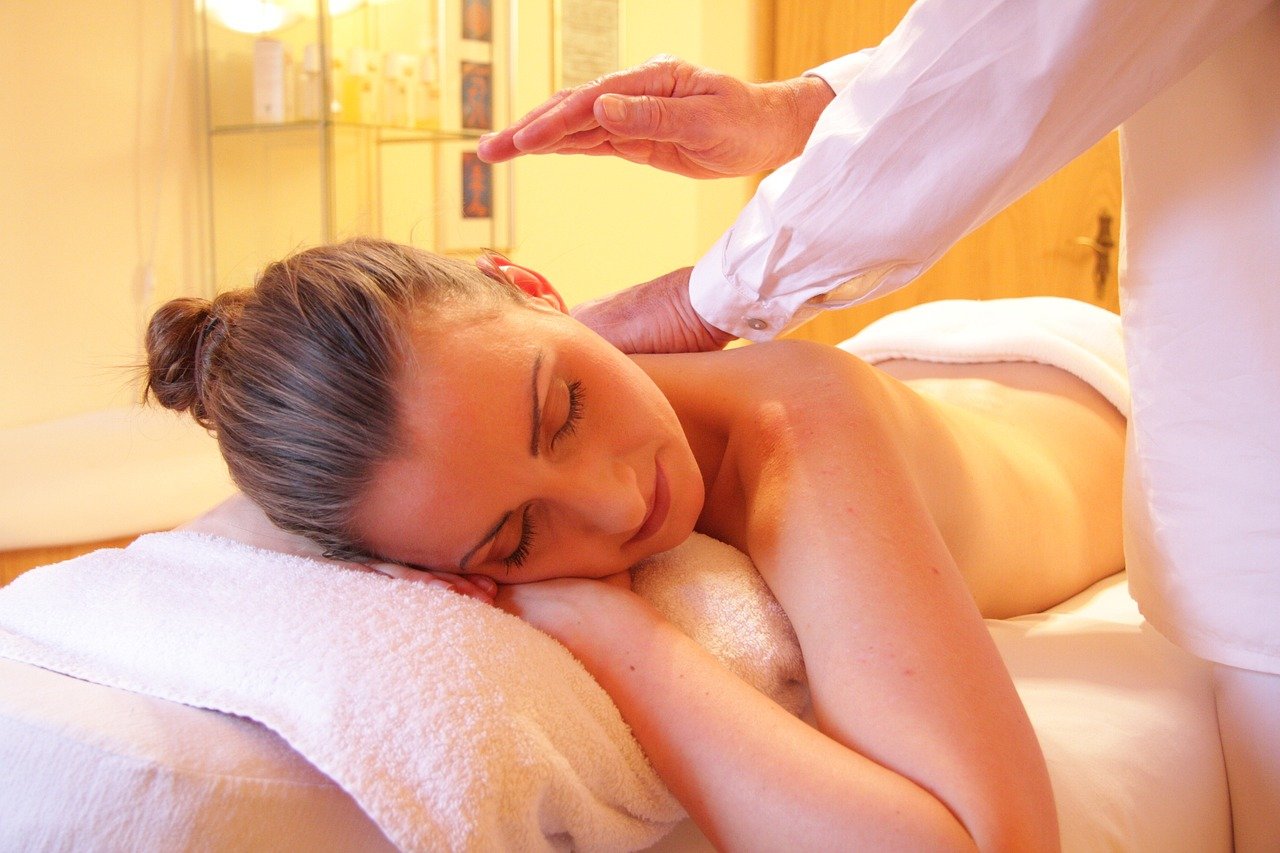
Gentle, slow and warm. You undress only as far as you’re comfortable with and are covered throughout; treatment through light clothing is fine if you’d prefer. The room is warm. Most people are asleep within ten minutes.
Afterwards
Water, time to sit up, and a note of anything to watch for over the next day or two. If something wasn’t right, say so; the next session is adjusted. There’s no pressure to rebook.
After breast cancer surgery: the most common reason people come
This is the single most common reason people search for oncology massage, so it deserves its own section.
After a lumpectomy or mastectomy, with or without reconstruction, the shoulder on that side often stiffens, the chest wall tightens, and the scar can pull. People guard the side without realising, and the tension spreads into the neck and the other shoulder.
Early on, massage works around the surgical site entirely: the back, the neck, the other shoulder, for the tension of holding one side of the body still.
Once the wound has healed and your surgeon or breast care nurse is happy, gentle work closer to the site can begin.
Later, and only with your agreement, work on the scar itself to keep it mobile.
If lymph nodes were removed from the armpit, that arm is at lifelong risk of lymphoedema, so general massage on it is avoided and anything that might increase swelling is left alone. The rest of you can still be treated normally.
Lymphoedema: what massage can and cannot do
Lymphoedema is swelling, usually in an arm or leg, caused by damage to the lymphatic system from surgery or radiotherapy. Cancer Research UK’s guidance is clear that general massage should not be given to a swollen limb, and I won’t.
The treatment that does help lymphoedema is manual lymphatic drainage, which is a separate, specialist technique with its own training. I don’t offer it. Your lymphoedema nurse or clinic can refer you to someone who does, and there’s no conflict between having that and having oncology massage on the rest of your body. Several of my clients do both.
Who it helps, including the people who never book for themselves
- People in chemotherapy or immunotherapy, between cycles, for muscle aches, nausea-related tension, restless legs and sleep.
- People after surgery, once the surgeon is happy, for stiffness wherever the operation was and, later, for scar tissue.
- People in radiotherapy, working well away from the treatment field, for the tiredness and tension that build over a course.
- People on long-term hormone therapy, where joint and muscle pain is a common side effect that doesn’t get much attention.
- People in remission who want to get back to exercise and find their body has forgotten how, or who are carrying stiffness from treatment years later.
- People in palliative care, for comfort, with the medical team’s agreement and usually at home.
- Carers. The people most likely to say they don’t have time, carrying a different kind of tension, and almost never getting anything for themselves. If you’re reading this on behalf of someone else, this line is for you.
How to tell whether a therapist is qualified for this
Massage is unregulated in the UK, and “experience with cancer patients” is not the same as training. Before you book anywhere, ask three things.
1. “What oncology massage qualification do you hold, and from whom?” A proper course covers cancer treatments and their side effects, contraindications, positioning, lymphoedema risk and pressure adaptation. It takes days, not an afternoon. Mine is from The School of Natural Therapies.
2. “Will you ask about my treatment, my counts and my surgical sites before you touch me?” If the answer is a vague “we’ll see how you feel”, go elsewhere.
3. “Will you work with my medical team’s guidance?” A therapist who tells you not to bother your oncologist is a therapist to avoid.
The other thing to look for is honesty about limits. A good oncology massage therapist will tell you plainly what they will not do: deep pressure, work on a swollen limb, anything near a current radiotherapy field, treatment on a day you’re unwell. Those refusals are the qualification in action.
Why so few therapists offer it
Two reasons. The training is an extra qualification on top of a massage diploma, with real anatomy and pharmacology in it, and most therapists never go looking for it because the handbook they trained from said “don’t”. And the work is slower, quieter and less profitable per hour than sports massage: a therapist who spends twenty minutes on a consultation and thirty on a gentle treatment is not running a high-volume clinic.
The people who do it tend to do it because someone close to them needed it and couldn’t find it. That’s why, if you’ve found a therapist who holds the qualification within reach of Welling, it’s worth the drive.
Prices, home visits and getting to the clinic
Oncology massage costs the same as every other treatment at Massage Works: £50 for 60 minutes, £80 for 90. Nobody in treatment should pay more for being treated carefully. Those are the online booking prices, £10 below my standard rate.
The clinic is at 15 St Michaels Road, Welling, DA16 2AH, with parking nearby. I’m open Monday to Friday 9am to 7pm and Saturday 9am to 3pm.
Massage at home during treatment
For a lot of people in active treatment, the hardest part of a clinic appointment is the journey. So I do home visits up to 30 km from Welling, which covers Bexleyheath, Sidcup, Dartford, Eltham, Greenwich, Bromley and most of South East London, at the same price, with a travel fee only for longer distances.
I bring a treatment table, or work on a bed or sofa if that’s easier. The session is otherwise identical: same consultation, same adaptations. For anyone in palliative care, home is usually the only sensible option, and sessions can be short and frequent rather than long and rare.
Preparing for your first session
Bring your most recent clinic letter if you have one. Wear something loose and easy to change in and out of, or that you’re happy to be treated through. Eat something light beforehand and bring water. If you have a port, line, drain or dressing, mention it when you book so the room is set up for side-lying from the start.
“But what about…” The questions people are nervous to ask
Can I have a massage while I’m having chemotherapy?
Usually yes, with your team’s agreement. Most people feel best in the second half of a cycle, a few days before the next dose. Avoid the days immediately after treatment if you feel unwell or your counts are at their lowest.
Can I have a massage after a mastectomy or lumpectomy?
Yes, once the wound has healed and your surgeon or breast care nurse is happy. Early sessions avoid the chest wall and work on the back, neck and the other shoulder. Scar work comes later and only with your agreement.
I have lymphoedema. Can you massage the swollen arm?
No. General massage on a limb with lymphoedema isn’t safe, and that limb is left alone. The rest of you can still be treated. Manual lymphatic drainage is a separate specialism; ask your lymphoedema nurse for a referral.
Do I really need to tell my oncologist?
Yes. Cancer Research UK, Macmillan and your treating team all say the same thing, and I’ll ask whether you have. A quick word with your specialist nurse is usually enough.
Will it hurt?
No. If anything hurts, say so and it stops. Oncology massage is never deep.
I have bone metastases.
Massage can still be possible, with specific adaptations and your team’s agreement. Tell me at the consultation so the affected areas are avoided and positioning adjusted; the treatment may be limited to hands, feet, face and neck.
I’m having radiotherapy.
Fine, away from the treatment area. The skin in the radiotherapy field isn’t touched during the course or until it has recovered afterwards, and no oils are used near it.
I have a port or PICC line.
Not a problem. The area around it is avoided and you’re positioned so there’s no pressure on it, usually side-lying or on your back.
What if I’m too tired for a full hour?
Then it’s a shorter treatment and a longer rest, at the same price. Tiredness is the most common reason sessions are cut short, and it’s entirely expected.
I’ve lost my hair / I have a stoma / I don’t want to undress.
None of it matters to me and none of it changes the quality of the treatment. You can be treated through clothing, with a head covering on, in whatever position you’re comfortable in. Say what you need and that’s how we’ll do it.
Can my partner or carer book?
Yes, and they should. They’re the people most likely to say they don’t have time.
Had a session with Tom today. He was very knowledgable, kind and did a thorough job. As I am someone diagnosed with Autism, (which comes with sensory challenges) he was very accommodating and non judgemental.
Google review
Very professional and took the time to learn about the somewhat unique nature of my spine and ribcage before starting and adapted the massage to suit perfectly.
Google review
Read next
- Oncology massage: the service page, with the clinical detail
- Cancer Research UK on massage therapy
- About Tom and his training
Book an oncology massage, or just ask
If you’re not sure whether massage is right for you at this stage of treatment, send a message or call and ask. There’s no obligation and no pressure, and I’ll tell you honestly if I think you should wait. Otherwise, book online and choose Oncology Massage Therapy.
Oncology massage in Welling
Book an oncology massage
Not sure whether massage is right for you at this stage of treatment? Send a message or call and ask; there is no obligation and no pressure. Otherwise book online and choose Oncology Massage Therapy.
Take care of yourself,
Tom McCayLevel 5 Sports Massage Therapist and Certified Oncology Massage Therapist
Massage Works, Welling
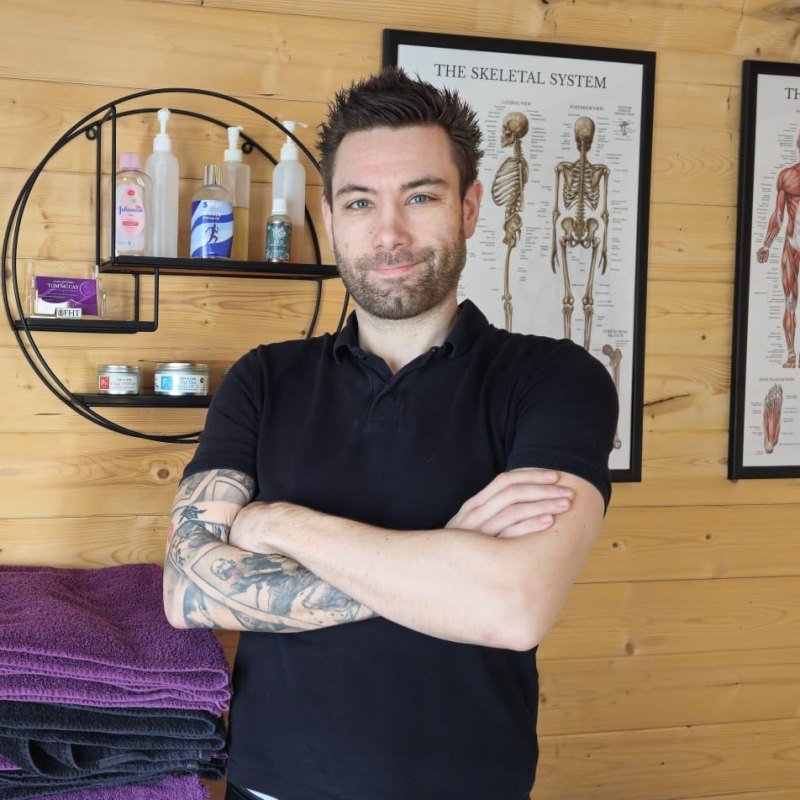
Tom McCay is the founder of Massage Works in Welling. He holds the Level 5 Professional Diploma in Soft Tissue Therapy (Institute of Sport and Remedial Massage, 2024, Distinction in clinical assessment), the VTCT Level 3 Sports Massage Diploma (2023) and an Oncology Massage Certification from The School of Natural Therapies (2025). He treats clients at his Welling clinic and at home across Bexley and South East London. Nothing on this page replaces advice from your medical team.